1. Saying “Buen Camino” Without Overthinking It
“Buen Camino” is the familiar pilgrim greeting, roughly meaning “have a good journey”. You will hear it when people pass, leave a café or set off after a rest. In Portugal, “Bom Caminho” is the Portuguese equivalent. Either greeting, offered warmly, is a lovely way to acknowledge another walker without expecting a conversation.
There is no requirement to greet everyone, every time. On a busy stretch, a smile or nod can be enough. Someone climbing a hill, managing discomfort or walking quietly may not answer. Take that gently rather than personally. The Camino attracts people seeking friendship, reflection, faith, fresh air or a mixture of all four, sometimes within the same morning.
When conversation does begin, let it develop naturally. Asking where someone started is usually easier than asking why they are walking. Personal stories sometimes emerge, but they are not owed to strangers. Equally, avoid judging anyone’s distance, equipment or use of transport. A person walking a short section may be making a considerable effort, and you rarely know the circumstances behind another traveller’s choices.
2. Sharing Paths, Boardwalks and Roadside Sections
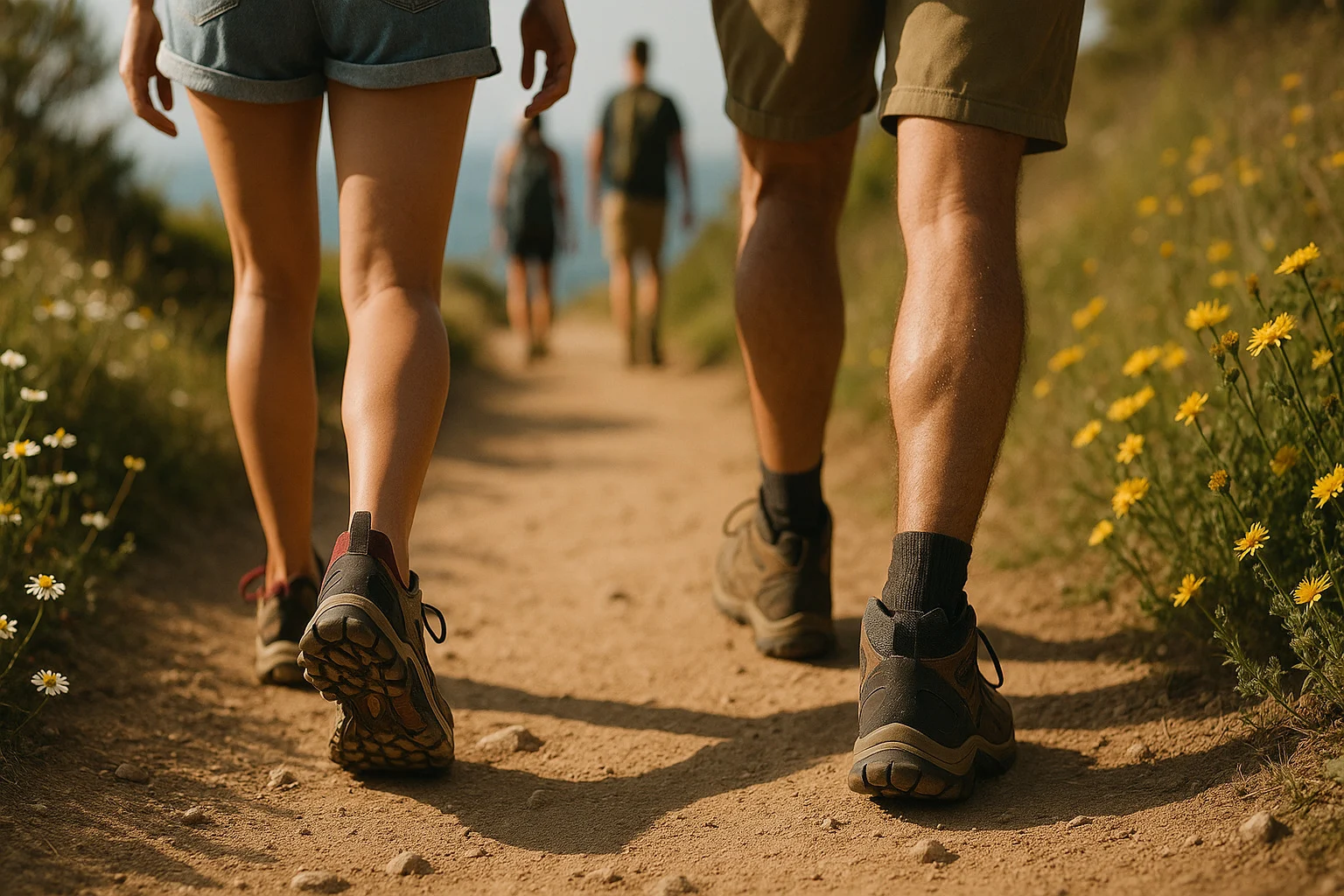
The route is shared with residents, dog walkers, cyclists and people simply going about their day. Where paths narrow, move into single file and leave room for others to pass. Coastal boardwalks can feel especially tight when groups meet. Keep walking poles close to your body, and avoid swinging their tips across the space beside or behind you.
Before overtaking, offer a greeting or a polite “excuse me”, then wait for a safe opening. If a cyclist approaches, remain predictable rather than stepping suddenly sideways. At viewpoints, junctions and route markers, move clear before stopping for photographs or checking your phone. A small group gathered around a map can unintentionally block the entire path.
Not every section is a dedicated walking trail. Follow local signs and pedestrian facilities, and take particular care where the route meets traffic. Avoid walking several abreast on narrow roadside stretches. If you use headphones, keep enough awareness to hear approaching people and vehicles. For car-assisted walkers, pickups should happen at suitable agreed locations, not wherever a tired person happens to stop.
3. Entering Churches as a Welcome Guest
A church along the Camino may be a landmark for visitors, but it remains a place of prayer for its community. Pause at the entrance, read any notices and lower your voice before stepping inside. Remove headphones and silence your phone. A service, funeral or private moment of devotion always deserves more consideration than a sightseeing schedule.
Dress respectfully and follow any guidance displayed locally. Carrying a light layer makes it easy to cover shoulders when appropriate without complicating your walking outfit. Remove hats where requested or customary, and keep backpacks and poles from knocking against pews, walls or other visitors. If your shoes are muddy, take a moment to clean them before entering.
Photography rules vary, so check rather than assume. Avoid flash, never photograph worshippers closely without permission, and put the camera away if it would disturb a service. Only enter areas open to visitors; an open doorway is not automatically an invitation. At Santiago Cathedral, follow the current instructions for visitors and pilgrims. You can appreciate the building deeply without sharing its faith, provided you respect those who do.
4. Respecting Village Life and Private Land
Village streets are not a stage set for the Camino. People are opening shops, taking children out and resting behind windows that may sit directly beside the route. Keep voices low early in the day, especially when travelling as a group. Avoid gathering across doorways, driveways or narrow pavements, and ask before photographing residents or looking closely into private courtyards.
Follow the marked route and respect signs, fences and boundaries. A tempting shortcut across a field may cross crops or private property. Fruit hanging within reach is not there for passing walkers to pick. Do not approach or feed livestock, and give working animals space. If the route legitimately passes through a gate, follow any instructions and leave it as you found it.
Cafés and small shops deserve the same everyday courtesy you would offer at home. Ask before using a toilet if you are not a customer, and do not assume a business can refill bottles or accommodate a large group immediately. Buying something locally can be a welcome way to contribute, but patience matters too. A village’s normal working day does not necessarily run to a walker’s timetable.
5. A Practical Courtesy Checklist for Each Walking Day
Good habits are easiest when you prepare for them before setting off. A small rubbish bag, tissues, a light covering layer and accessible water help you avoid awkward situations later. Keep essentials somewhere you can reach without emptying your entire backpack across a bench or church step.
Plan toilet stops where facilities are available, and ask your guide about opportunities along your chosen section. Never use private gardens, church grounds or the spaces beside homes as outdoor toilets. If an unexpected need arises away from facilities, protect water sources and carry out tissues and hygiene waste.
Think of rest stops as shared spaces rather than temporary camps. Leave somewhere for the next person to sit, keep music to yourself and take your belongings when you leave. These small actions make a noticeable difference without requiring any special knowledge of Camino traditions.
- Carry out all rubbish, including fruit peel and food scraps.
- Ask permission before including strangers in close-up photographs.
- Keep backpacks off seats when others need somewhere to rest.
- Use headphones rather than playing music through a speaker.
- Follow local signs, including temporary diversions and access restrictions.
- Leave fountains and water points clean; check whether water is drinkable.
- Report a problem calmly rather than confronting another walker aggressively.
6. How a Car-Assisted Camino Helps You Travel Considerately
Portugal Magik’s 10-day private Camino on the Portuguese Coastal Route combines walking with private car assistance, with an itinerary taking in Porto, Viana do Castelo, Tui, O Porriño, Baiona, Vigo, Padrón and Santiago. These stops involve both coastal and inland travel, rather than one continuous coastal walk. Your car drops you off and picks you up so you can walk selected sections and ride the rest.
Choose Light walking of approximately 2–3 km daily: gentle sections, sightseeing by car and full assistance, suited to older travellers or people with walking limitations. Medium offers around 5–7 km for average walkers wanting nothing strenuous. Intense covers approximately 12–15 km, typically whole mornings or longer, for regular walkers and hikers. Paces can change daily, and each person can walk a different distance.
That flexibility reduces the pressure to rush through villages or push beyond a comfortable distance. Luggage is taken care of every day, breakfast is included daily, and accommodation is in hand-picked hotels, with 5-star boutique properties in the top tier. Based on two guests, Comfort starts from €4,950, Premium from €5,650 and Private Deluxe from €7,250 per person; group discounts apply for three or more. Request a quote to discuss walking preferences and a considerate, realistic plan.
7. Arriving in Santiago with the Same Thoughtfulness
Reaching Santiago can bring relief, excitement or an unexpectedly quiet feeling. Give yourself room for whichever response arrives, and extend that room to others. In the streets around the cathedral, avoid blocking entrances while taking photographs or celebrating. Someone beside you may be finishing a long pilgrimage, heading to worship or simply trying to get to work.
If you hope to receive the Compostela, distinguish enjoying the Camino from meeting its certification requirements. The Compostela requires the last 100 km on foot, or 200 km by bike, with two stamps a day on the final stretch. Car-assisted sightseeing and selected walks do not automatically qualify. Discuss this goal before booking: the Light and Medium paces described here are not designed to fulfil that walking requirement.
Above all, resist turning etiquette into a test that other people must pass. A gentle request usually works better than a public correction, and an honest apology puts most small mistakes right. Say “Buen Camino” when it feels natural, make space when someone needs it and leave places as you would hope to find them. Those habits carry comfortably from the first Portuguese village to your final moments in Santiago.
Pick your walking pace
You don't need to be a hiker. Choose how much you'd like to walk each day.
Light
2–3 km a day
Short, gentle walks on the easiest stretches. The rest of the day is by private car, with sightseeing and full assistance.
Best for: Older travellers and anyone with walking limitations
Request this paceMedium
5–7 km a day
A relaxed walk of an hour or two on beautiful sections, then your driver takes you on. Nothing strenuous.
Best for: Average walkers with no walking issues
Request this paceIntense
12–15 km a day
Typically whole mornings or longer on the trail, with luggage handled and the car waiting at the end of the stage.
Best for: Regular walkers and hikers — advanced level
Request this paceDistances are approximate. Your car is private, so you can change pace day by day — and each person in your group can walk a different distance.
Walk the Camino with Portugal Magik
10 days on the Portuguese Coastal Route with private car assistance, luggage transfer and handpicked hotels.