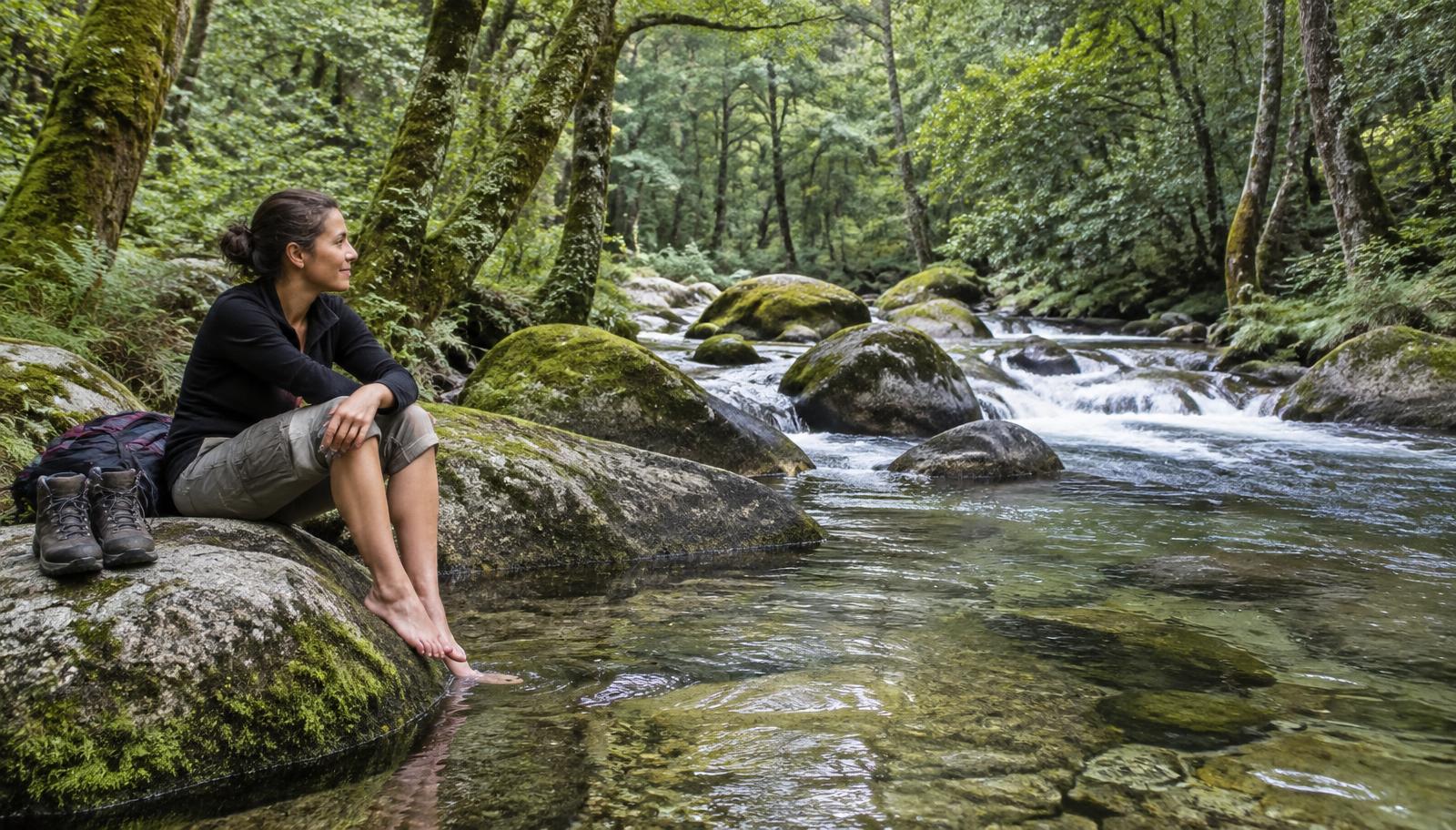
1. What Autumn Really Feels Like on the Camino
There is no single version of autumn along the Portuguese coast and into Galicia. September can still feel summery, especially in the afternoon. October usually brings a more noticeable seasonal shift, while November has shorter days and a greater chance of unsettled conditions. These are useful patterns for planning, not promises about the weather you will meet on your particular dates.
The scenery changes gradually rather than all at once. Around Porto and Viana do Castelo, the Atlantic remains the strongest presence: wide skies, moving water and coastal vegetation shaped by wind. Farther inland, around Tui and on the approach towards Padrón and Santiago, woodland, gardens and farmland give the season a different texture. Some stretches feel distinctly autumnal; others remain surprisingly green.
Our 10-day private journey brings together Porto, Viana do Castelo, Tui, O Porriño, Baiona, Vigo, Padrón and Santiago, combining selected walks with transfers and sightseeing. Think of it as a car-assisted exploration of the Portuguese Coastal Camino and its surrounding places, rather than an uninterrupted town-to-town walk. In autumn, that distinction matters: you can appreciate the journey without needing to cover every connecting kilometre.
2. Weather: Plan for Variety, Not Just Rain
The Atlantic influences this journey from the beginning. A morning can open under grey cloud and brighten later; another day may stay wet for hours. Coastal wind can make mild temperatures feel cooler, particularly when you stop walking. Inland sections may feel more sheltered, but they are not automatically dry. Checking a local forecast each day is more useful than relying on a monthly average.
Rain changes the walking surface as much as it changes the view. Stone paving can become slippery, fallen leaves can hide uneven ground, and woodland paths may hold puddles or mud. Boardwalks also deserve care when wet. Shoes with dependable grip, a comfortable pace and permission to shorten a walk are sensible precautions. There is no prize for pressing on when conditions stop being enjoyable.
Daylight deserves equal attention, particularly later in autumn. Start with enough time to walk comfortably, take breaks and finish before darkness rather than squeezing everything into the afternoon. A lighter day can still include a satisfying coastal stretch, a sheltered pause and time exploring a town. The aim is not to avoid every shower, but to arrange your day so changing weather remains manageable.
3. Autumn Colours: Look for the Smaller Details
If you picture an unbroken corridor of red and gold trees, adjust that image slightly. This route moves through coastal landscapes, towns, woodland and agricultural areas, with plenty of evergreen vegetation along the way. Autumn colour appears in pockets and layers. A turning vine, a chestnut tree or leaves scattered across an old stone lane can be more memorable than a sweeping panorama.
September often holds onto summer's green, while colour may become more apparent as the season progresses. The timing depends on location and the year's conditions, so there is no reliable date for peak foliage across the whole journey. Instead of building your trip around a particular colour forecast, enjoy the contrasts: dark trunks after rain, pale stone, green fields and occasional warm flashes among the leaves.
The light can be just as beautiful as the foliage. Around Baiona and Vigo, breaks in the cloud may bring definition to the water and waterfront buildings. Near Padrón, a softer inland landscape offers a different mood. Give yourself time to stop when something catches your eye, but keep your expectations open. Autumn's appeal often lies in an ordinary scene suddenly looking rather special.
4. Harvest Season and the Pleasure of a Warm Table
Autumn also changes what you notice around villages and farms. Northern Portugal and Galicia have strong agricultural traditions, and vineyards, orchards and cultivated plots form part of the landscape. Grape harvesting commonly falls around late summer and early autumn, although timing varies with the weather and location. You may see seasonal work underway, but a passing walk should not be treated as a scheduled harvest experience.
At the table, look for seasonal touches rather than expecting a fixed autumn menu. Chestnuts, apples and comforting soups can all belong to the season, while local cooking reflects the coast as well as the countryside. Availability varies from place to place. Asking what is seasonal is often the easiest way to discover something appealing without turning lunch into a complicated research project.
There is particular satisfaction in sitting down after a cool or damp walk, taking off a jacket and letting the day slow down. Leave room in your schedule for that pleasure. Breakfast is included daily on our journey; lunches and dinners are not included. You can choose meals according to your appetite and budget, whether that means something simple or a more leisurely evening.
5. Quieter Trails, Without Expecting Solitude
Autumn can bring a gentler atmosphere than the busiest summer weeks, especially as the season advances. Yet quieter does not mean empty. September remains a popular walking month, and the approaches to Santiago gather pilgrims from different routes. Weekends and local holidays can also change the feel of a place. Expect variation between sections rather than a steady decrease in people every day.
Often, the difference is less about having a path entirely to yourself and more about having space to find your own rhythm. You might walk quietly for a while, exchange greetings with another pilgrim, then share a café with several small groups. Those encounters are part of the Camino. A calm journey can include companionship without needing to become a solitary one.
As autumn progresses, some seasonal businesses may reduce their service or close, particularly in coastal areas. Carry water and a snack rather than assuming the next café will be open. Accommodation also deserves advance planning: fewer walkers do not guarantee a room in your preferred property. Booking ahead remains sensible when you want a particular comfort level or are travelling on fixed dates.
6. A Practical Autumn Packing and Planning Checklist
Pack for a sequence of changing conditions rather than one imagined perfect walking day. Several lighter layers are generally easier to adjust than a single heavy garment. Try your waterproof jacket and walking shoes before travelling, ideally on a wet local walk. Small annoyances at home, such as rubbing heels or an awkward hood, rarely improve after several consecutive days outside.
Keep the things you may need during the walk within reach, even when your main luggage travels separately. That means weather protection, water, any personal medication and a little food. Spare dry socks can make a surprisingly welcome difference. Protect your phone and documents from moisture too; a waterproof jacket does not necessarily mean everything in its pockets will stay dry.
The checklist below keeps the focus on comfort and sound decisions rather than specialist equipment. Adapt it to your usual needs, and discuss walking limitations before booking. If you are unsure how several walking days might affect an existing health condition, seek advice from your clinician rather than assuming that a short daily distance will automatically be suitable.
- Choose broken-in walking shoes with good grip and socks you have already tested.
- Bring a waterproof jacket, adjustable layers and protection for your day bag.
- Carry water, a snack, personal medication and a charged phone on each walk.
- Consider walking poles if you already find them helpful on uneven or slippery ground.
- Check the daily forecast and daylight window before deciding on distance and timing.
- Keep a dry change of clothes accessible for greater comfort after a wet walk.
7. How Our Car-Assisted Camino Makes Autumn Easier
Private car support makes it easier to shape the journey around your energy and the conditions. We drop you off and pick you up so you can walk the best sections and ride the rest, with luggage taken care of every day. That flexibility does not remove the weather, but it gives you alternatives when a long exposed walk no longer feels appealing.
Choose Light walking, approximately 2–3 km daily, for a gentle experience suited to older travellers or people with walking limitations, with sightseeing by car and full assistance. Medium offers approximately 5–7 km for average walkers wanting nothing strenuous. Intense means approximately 12–15 km, typically whole mornings or longer, for regular walkers and hikers. Paces can change daily, and each person can walk a different distance.
Our 10-day packages include daily breakfast and hand-picked hotels, with 5-star boutique properties in the top tier. Comfort starts from €4,950, Premium from €5,650 and Private Deluxe from €7,250 per person, based on two guests; group discounts apply for three or more. Request a quote from Portugal Magik with your dates and preferred pace. If earning the Compostela matters, tell us: selected walks with transfers do not automatically meet its requirements.
Pick your walking pace
You don't need to be a hiker. Choose how much you'd like to walk each day.
Light
2–3 km a day
Short, gentle walks on the easiest stretches. The rest of the day is by private car, with sightseeing and full assistance.
Best for: Older travellers and anyone with walking limitations
Request this paceMedium
5–7 km a day
A relaxed walk of an hour or two on beautiful sections, then your driver takes you on. Nothing strenuous.
Best for: Average walkers with no walking issues
Request this paceIntense
12–15 km a day
Typically whole mornings or longer on the trail, with luggage handled and the car waiting at the end of the stage.
Best for: Regular walkers and hikers — advanced level
Request this paceDistances are approximate. Your car is private, so you can change pace day by day — and each person in your group can walk a different distance.
Walk the Camino with Portugal Magik
10 days on the Portuguese Coastal Route with private car assistance, luggage transfer and handpicked hotels.