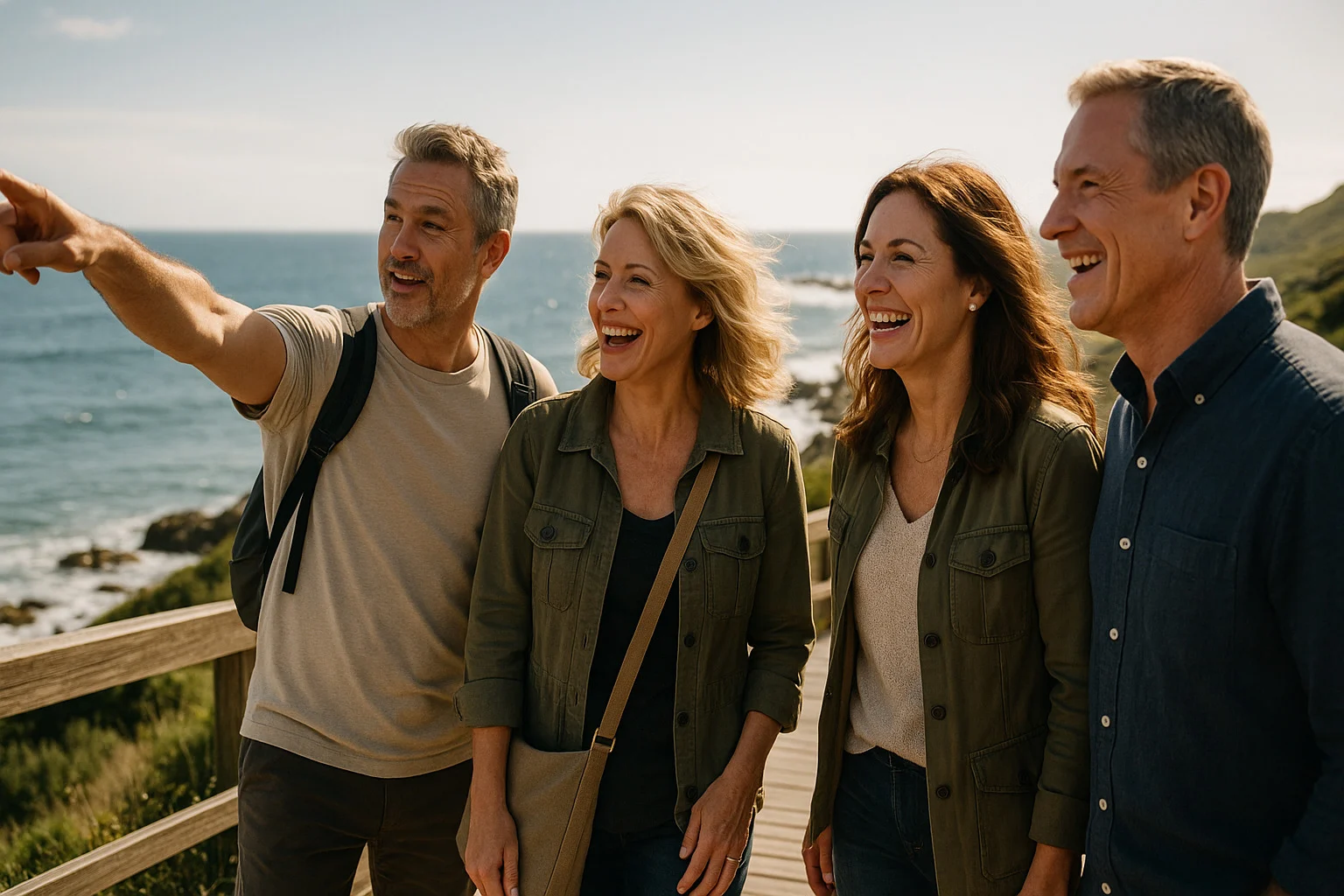
1. Choose the Experience You Want, Not the Distance You Think You Should Walk
The most useful question is not “How far could I walk if I really pushed myself?” It is “How far would I enjoy walking, knowing I will be travelling again tomorrow?” A distance that feels manageable on a single weekend outing can feel different over several days. Think about how you want to feel afterwards: pleasantly exercised, ready for sightseeing, or satisfied after a substantial morning on foot.
Our three options describe approximate daily walking distances, with the private car covering the rest. Light means 2–3 km a day, Medium means 5–7 km, and Intense means 12–15 km. These are choices, not fixed commitments. Your pace can change from one day to the next, and travelling companions can choose different distances on the same day.
Distance is only part of the picture. Slopes, uneven paving, standing during sightseeing and the weather can all affect how demanding a day feels. Your usual walking habits are a better starting point than your age or someone else’s expectations. There is no prize for choosing the longest option, and no reason to make walking the source of tension on an otherwise meaningful journey together.
2. Light: Gentle Walking with Room to Enjoy the Journey
Light walking is approximately 2–3 km a day, with sightseeing by car and full assistance. It suits travellers who want the pleasure of being on the Camino without making sustained walking the centre of every day. For some older travellers and people with walking limitations, it offers a more approachable way to take part, provided the selected sections suit their individual needs.
Picture a short stretch on foot, time to notice the landscape, and a car transfer rather than another several kilometres when you have had enough. You are still moving through northern Portugal and Galicia, discovering places along the way and approaching Santiago. The experience simply gives more weight to scenery, local atmosphere and shared discoveries than to covering ground under your own steam.
Light does not mean every surface is flat or every walk is automatically suitable for every mobility condition. Before travelling, tell us about difficulties with steps, balance, hills or prolonged standing, and any mobility aids you use. If you have a medical concern, seek advice from your clinician. Honest information helps us discuss realistic sections rather than assuming that a short distance will necessarily be easy.
3. Medium: A Satisfying Walk Without Making the Day Strenuous
Medium walking is approximately 5–7 km a day, intended for average walkers who want nothing strenuous. It is often a sensible starting point if you enjoy walking at home but do not regularly plan long hikes. There is enough distance to settle into the rhythm of the path, while the car covers the stretches that would otherwise turn a pleasant outing into an endurance exercise.
This option may appeal if you want walking to be a noticeable part of your holiday without using up all your energy. You might enjoy a sustained stretch through changing surroundings, then appreciate being driven onward. The aim is not to hurry through those kilometres. It is to choose a distance that leaves you interested in the next stop, rather than counting the minutes until you can sit down.
Before choosing Medium, try several walks near home in the shoes you intend to bring. Notice how your feet, knees and energy levels feel later that day and the following morning. A single comfortable walk is encouraging; feeling comfortable after consecutive walking days tells you more. If 5–7 km starts to feel like an obligation, Light remains a perfectly reasonable choice, including for just one day.
4. Intense: Longer Mornings for People Who Enjoy Walking
Intense walking is approximately 12–15 km a day, usually taking whole mornings or longer, depending on the section, your speed and your stops. It is best suited to regular walkers and hikers who actively look forward to time on their feet. Choose it because you enjoy sustained walking, not because you feel that a Camino only counts if it leaves you exhausted.
At this distance, preparation becomes particularly useful. Familiar walking shoes, comfortable socks and a day bag you have already tested can make a difference. Build up with longer walks before departure, ideally including consecutive days. You do not need to treat the trip as a race, but it helps to know how you respond to several hours of movement rather than relying on general fitness alone.
Even enthusiastic hikers can prefer a shorter day after poor sleep, sore feet or an unexpectedly tiring section. You can switch to Medium or Light rather than trying to defend your original choice. Discuss changes and pickup arrangements with your guide or driver before setting out whenever possible. Car assistance provides flexibility, but road access still determines where a vehicle can meet you safely.
5. Different Fitness Levels Do Not Have to Mean Separate Holidays
Couples often assume they must find one shared distance, which can leave one person frustrated and the other under pressure. With private car assistance, each person can walk a different distance. One partner might choose Light while the other chooses Intense, or one might alternate between Medium and Light while the other keeps a steadier routine. Neither needs to turn the holiday into a daily negotiation about keeping up.
Depending on the day’s route and suitable vehicle access, you might walk a shorter section together before one partner continues and the other meets the car. Another arrangement could involve different drop-off points and a planned reunion later. These are possibilities to coordinate, not a promise of identical logistics every day. A shared private car needs a workable plan; it cannot accompany two separate walkers continuously.
It helps to discuss what matters most before departure. Perhaps you want some walking time together each day, or perhaps sharing breakfast and exploring the next town is more important. The fitter partner can enjoy a longer stretch without setting the other person’s pace. The shorter-distance walker can finish comfortably without feeling responsible for cutting someone else’s walk short. That freedom often matters more than the kilometre total.
6. A Practical Checklist for Choosing Your Starting Pace
You do not need to predict exactly how you will feel throughout a 10-day journey. You do need a realistic starting point and a clear conversation about your needs. Choose according to your current habits rather than a fitness level you hope to reach, then use preparation walks to check whether that choice feels right.
Consider the whole travelling day, not only the walking section. Exploring towns, standing to look at sights and moving around your hotel all add activity beyond the planned kilometres. If you usually need a substantial rest after walking, mention that too. Leaving some energy in reserve can make the journey more enjoyable.
Use the checklist below together, but answer it individually. Your answers do not need to match. Agreeing that each person can change their mind is just as useful as choosing an initial distance.
- Choose Light, 2–3 km, if gentle walking with sightseeing by car sounds most appealing.
- Choose Medium, 5–7 km, if regular moderate walks feel comfortable and you want nothing strenuous.
- Choose Intense, 12–15 km, if you already enjoy longer walks and whole mornings on foot.
- Test your intended footwear and distance on consecutive days, not just one outing.
- Share walking limitations, mobility aids and relevant concerns before your itinerary is arranged.
- Confirm drop-off and pickup plans, and discuss any desired distance changes before walking.
- Decide which parts of the day you most want to share, without requiring equal kilometres.
7. How Our Car-Assisted Camino Brings It All Together
Portugal Magik’s 10-day private Camino follows a Portuguese Coastal Route journey featuring Porto, Viana do Castelo, Tui, O Porriño, Baiona, Vigo, Padrón and Santiago. Private car support drops you off and picks you up so you can walk selected highlights and ride the rest. Luggage is taken care of every day, breakfast is included daily, and accommodation is in hand-picked hotels, with 5-star boutique properties in the top tier.
One important distinction: this flexible, car-assisted journey is not automatically a qualifying walk for the Compostela certificate. The Compostela requires the last 100 km on foot, or 200 km by bike, with two stamps a day on the final stretch. Kilometres covered by car do not count towards the walking requirement. If earning the certificate matters to you, tell us before booking so we can discuss that goal explicitly.
Packages start from €4,950 for Comfort, €5,650 for Premium and €7,250 for Private Deluxe, per person based on two guests, with group discounts for three or more. Request a quote and tell us your preferred dates, each person’s usual walking distance and how much time you would like to spend walking together. We can help you choose a realistic starting pace, leaving room for different energy levels and a journey you can both enjoy.
Pick your walking pace
You don't need to be a hiker. Choose how much you'd like to walk each day.
Light
2–3 km a day
Short, gentle walks on the easiest stretches. The rest of the day is by private car, with sightseeing and full assistance.
Best for: Older travellers and anyone with walking limitations
Request this paceMedium
5–7 km a day
A relaxed walk of an hour or two on beautiful sections, then your driver takes you on. Nothing strenuous.
Best for: Average walkers with no walking issues
Request this paceIntense
12–15 km a day
Typically whole mornings or longer on the trail, with luggage handled and the car waiting at the end of the stage.
Best for: Regular walkers and hikers — advanced level
Request this paceDistances are approximate. Your car is private, so you can change pace day by day — and each person in your group can walk a different distance.
Walk the Camino with Portugal Magik
10 days on the Portuguese Coastal Route with private car assistance, luggage transfer and handpicked hotels.