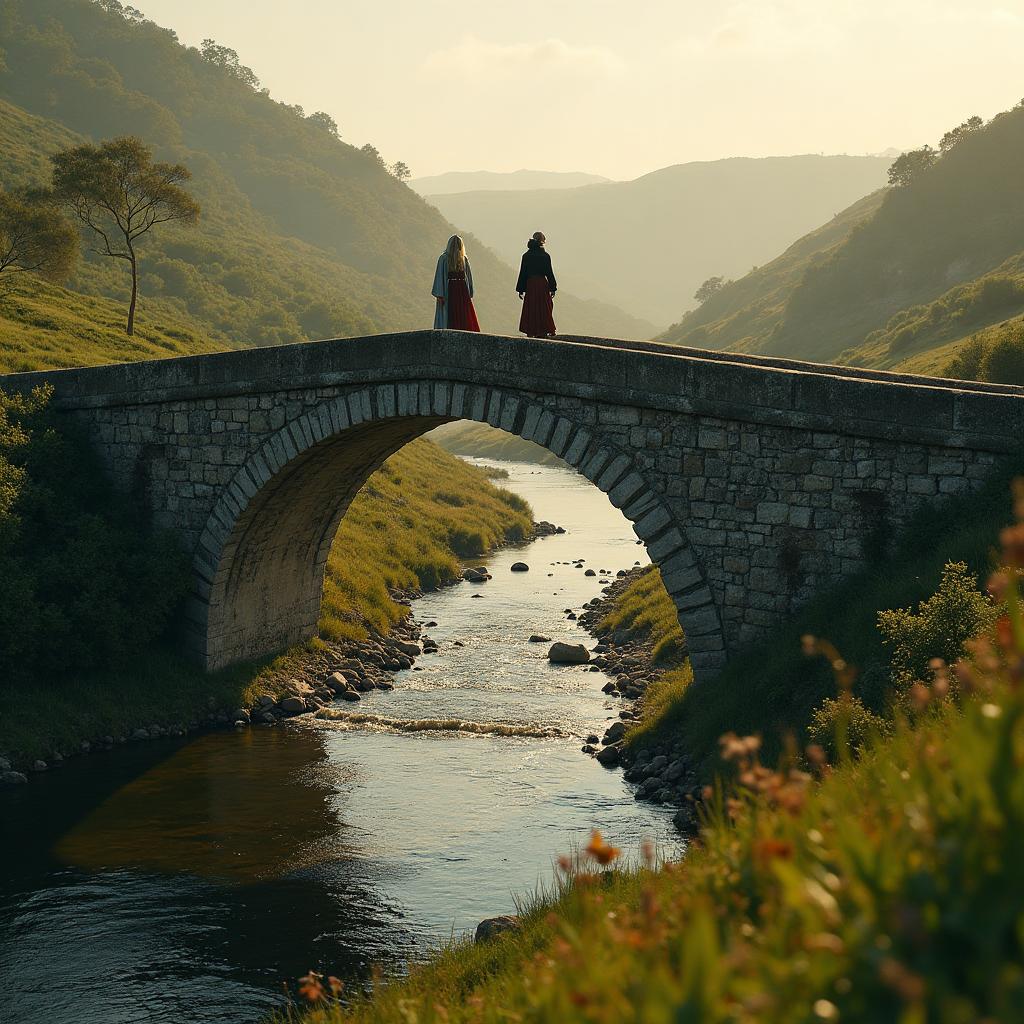
1. One River, Two Names, and a Meaningful Border
In Portugal, it is the Minho. In Galicia, you will see it called the Miño. The river forms part of the border between Portugal and Spain, connecting communities as much as separating them. Along its banks, the views remain reassuringly familiar: green slopes, riverside settlements and water carrying on towards the Atlantic. The political boundary is clear on a map; standing beside the river, the relationship between the two shores feels more interesting than a simple dividing line.
For a pilgrim, that line has an emotional weight. Portugal has provided the first chapters of the journey: Porto, the northern coast, perhaps time in Viana do Castelo, and the gradual adjustment to travelling at walking speed. Crossing into Galicia puts those experiences behind you geographically, without leaving them behind in spirit. You are still following the same intention, but a new part of the story has begun.
It is also worth keeping expectations realistic. Entering Galicia does not mean Santiago is just around the corner, nor does every traveller experience a dramatic surge of emotion. Sometimes the moment is simply a pause for a photograph, a glance back, or the pleasure of noticing a different spelling on a sign. Those small observations are often what make the border memorable.
2. Understanding Where Your Journey Crosses
The Portuguese Camino is a family of routes, so there is no single river crossing used by everyone. The coastal approach reaches the Minho near Caminha and the river mouth, with Galicia beyond. Farther inland, the crossing between Valença and Tui is associated with the Portuguese Central Route. These are distinct geographical choices, and knowing which your itinerary uses avoids confusion when you compare maps, photographs or other pilgrims’ accounts.
At Valença and Tui, the international bridge offers a particularly clear sense of passage between countries. Valença’s fortified setting belongs to the Portuguese side of the story; Tui rises on the Galician side, with its cathedral an important landmark. If your planned walking section includes this crossing, allow yourself to notice the approach as well as the bridge itself. The transition begins before you reach the water.
Portugal Magik’s 10-day, private, car-assisted Portuguese Coastal Route journey includes Porto, Viana do Castelo, Tui, O Porriño, Baiona, Vigo, Padrón and Santiago. It combines selected walking sections with travel by private car, rather than presenting every stop as one uninterrupted coastal walk. Tui and O Porriño are inland elements of that wider journey. Your detailed itinerary should make clear which border approach you will experience on foot and which connections you will make by car.
3. Listening for the Change of Language
The first change you notice may be written rather than spoken. Portuguese signs give way to Galician and Spanish, both official languages in Galicia. Place names, municipal notices and everyday greetings offer gentle reminders that you have crossed a border. Galician has a close historical relationship with Portuguese, so some words may look or sound familiar even when you cannot quite follow a conversation.
That familiarity is part of the pleasure, but Galician is not simply Portuguese spoken on the Spanish side of the river. It is a language in its own right. You may hear Galician, Spanish or a mixture of languages around you, depending on the setting and the people speaking. There is no need to identify everything correctly. Listening with curiosity, rather than expecting a neat linguistic switch at the bridge, is a better approach.
A Portuguese “bom dia” may become a Galician “bos días” or a Spanish “buenos días”. On the Camino, you may hear “bo Camiño” in Galician or the widely recognised “buen Camino” in Spanish. Try a greeting if you feel comfortable, and do not worry about producing a perfect accent. A friendly hello, a thank-you and patience when asking a question matter more than having a polished traveller’s vocabulary.
4. The Feeling of Entering the Final Region
Galicia is the Spanish region where Santiago de Compostela stands. Entering it can bring a welcome sense of focus: the destination is now in the same region as your footsteps. Yet “the final region” should not be confused with “the final short stretch”. There is still a journey ahead, and its meaning comes from giving the remaining days attention rather than treating them as a countdown.
The landscape does not obey the border with a sudden transformation. Green countryside, stone buildings and the Atlantic influence connect northern Portugal and Galicia. Gradually, individual places give the new chapter its character: Tui’s historic streets, the coastal settings around Baiona and Vigo, and later Padrón on the approach to Santiago. A car-assisted itinerary lets these different settings sit alongside one another without requiring you to walk every connecting kilometre.
Some travellers become more reflective after crossing. Others find fresh energy in the change of country, or simply enjoy comparing the details of daily life. There is no correct emotional response. If you are travelling with a partner or friends, you may find that the crossing means something different to each person. Leave room for that, perhaps with a short pause beside the river before moving on.
5. Practical Details for Crossing Comfortably
Portugal and Spain are both in the Schengen Area, so crossing this internal border is usually straightforward. That does not remove the need for appropriate travel documents or compliance with the entry conditions that apply to you. Carry your passport or applicable identity document securely, and check current requirements before travelling, since temporary controls can occur.
The most easily missed change is the time. Mainland Spain is one hour ahead of mainland Portugal. Your phone may update automatically, but check it before relying on a meeting time. On a supported journey, confirm whether a pickup or rendezvous is being discussed in Portuguese or Spanish local time, particularly on the day you cross.
Keep your walking-day essentials with you even when your main luggage is being transported. The river crossing is more enjoyable when you are not searching through bags or worrying about your next meeting point. A few simple checks help keep the day focused on the experience:
- Confirm your crossing point and which part of the day you will walk.
- Keep your travel document, any essential medication and your phone accessible.
- Check the one-hour time change before any scheduled meeting.
- Carry water and a suitable layer for the conditions that day.
- Keep your pilgrim credential handy if you are collecting stamps.
- Agree on the pickup location rather than assuming it will be obvious.
6. Crossing at Your Own Pace with Private Car Assistance
A border day need not become a test of endurance. Portugal Magik’s private car support drops you off and picks you up so you can walk the best sections for your journey and ride the rest. Your luggage is taken care of every day. That leaves you free to enjoy a riverside approach, a historic town or a meaningful stretch of trail without carrying your main bag.
You can choose Light walking of approximately 2–3 km a day: gentle distances suited to older travellers or people with walking limitations, with sightseeing by car and full assistance. Medium offers approximately 5–7 km for average walkers wanting nothing strenuous. Intense means approximately 12–15 km, typically whole mornings or longer, for regular walkers and hikers. The private car covers the rest; pace can change daily, and each person can walk a different distance. Discuss individual mobility needs so suitable sections can be planned.
The 10-day journey includes daily breakfast and hand-picked hotels, with 5-star boutique properties in the top tier. Comfort starts from €4,950, Premium from €5,650, and Private Deluxe from €7,250 per person, based on two guests; group discounts are available for three or more. Request a quote and tell us what matters most about your crossing: time to walk, time to explore, or simply a comfortable transition into Galicia.
7. Carrying the Crossing Forward to Santiago
After the river, it is tempting to measure everything against arrival in Santiago. Try to resist that a little. The following days have their own value, whether you are walking a selected section, exploring a town or watching the landscape from the car. The Minho is not a line that divides preparation from the “real” pilgrimage. Both shores belong to the experience.
If earning the Compostela is important to you, discuss that before booking. It requires the last 100 km on foot, or 200 km by bike, with two stamps a day on the final stretch. Riding parts of that required walking distance does not count towards it. A journey built around selected walks and private car transfers should not be assumed to qualify simply because it visits Tui and finishes in Santiago.
A car-assisted Camino can still be a deeply personal way to travel, whether or not a certificate is your aim. Looking back from Santiago, you may remember the cathedral first—or you may remember the river, the unfamiliar greeting, and that brief feeling of standing between two chapters. Give the crossing enough space to become your own memory. Then continue into Galicia at the pace that suits you.
Pick your walking pace
You don't need to be a hiker. Choose how much you'd like to walk each day.
Light
2–3 km a day
Short, gentle walks on the easiest stretches. The rest of the day is by private car, with sightseeing and full assistance.
Best for: Older travellers and anyone with walking limitations
Request this paceMedium
5–7 km a day
A relaxed walk of an hour or two on beautiful sections, then your driver takes you on. Nothing strenuous.
Best for: Average walkers with no walking issues
Request this paceIntense
12–15 km a day
Typically whole mornings or longer on the trail, with luggage handled and the car waiting at the end of the stage.
Best for: Regular walkers and hikers — advanced level
Request this paceDistances are approximate. Your car is private, so you can change pace day by day — and each person in your group can walk a different distance.
Walk the Camino with Portugal Magik
10 days on the Portuguese Coastal Route with private car assistance, luggage transfer and handpicked hotels.