1. A midday opening that marks a new beginning
The confirmed time is the first practical detail to remember: the Holy Door opens at midday on 31 December 2026, rather than at the usual late-afternoon hour. The ceremony marks the beginning of the Compostelan Holy Year of 2027. If you are travelling specifically for the opening, plan around that earlier timing, while checking the Cathedral’s latest guidance for attendance arrangements closer to the date.
The archbishop’s opening of the door gives visible form to the start of the Holy Year. A threshold normally closed becomes a way into the cathedral, and the idea is immediately understandable even to someone unfamiliar with Catholic tradition. An opening suggests welcome, possibility and movement. It turns the beginning of a new year into something people can see and contemplate, rather than merely a change on the calendar.
There is no need to imagine elaborate ceremonial details to appreciate its significance. The central act is the opening itself, rooted in Santiago’s tradition of pilgrimage and reconciliation. Those present may experience it through prayer, while others may watch with respectful curiosity. Either way, it is worth approaching the occasion as a religious ceremony, with patience and attention, rather than as a performance fitted between sightseeing stops.
2. What the Puerta Santa means
The Puerta Santa, also known as the Door of Forgiveness, is on the cathedral’s eastern side, facing the Praza da Quintana. Its setting connects the ceremony with the everyday geography of Santiago: stone squares, surrounding streets and a cathedral towards which pilgrims have travelled for centuries. Standing nearby, the door can feel both physically modest and symbolically important. Its meaning is not measured by its size.
Within Catholic tradition, passing through a holy door expresses a desire for spiritual renewal and reconciliation with God. The doorway is a symbol, not a shortcut. Walking through it does not automatically grant forgiveness or fulfil every requirement associated with a Holy Year indulgence. Anyone hoping to participate in that religious observance should consult the Cathedral or Pilgrim’s Office for the applicable requirements and guidance.
For a pilgrim, the threshold can also bring a long journey into focus. Days of walking leave space for thoughts that ordinary routines tend to crowd out: people missed, decisions postponed, things to be thankful for. Reaching the door offers a moment to acknowledge those thoughts. Visitors who do not share the faith can still respect that meaning, allowing others the space and quiet they need.
3. Why 2027 is a Holy Year in Santiago
A Compostelan Holy Year, often called a Xacobeo, occurs when 25 July, the feast of St James, falls on a Sunday. That is the case in 2027. These years follow an irregular 6–5–6–11-year cycle, rather than arriving at a fixed interval. The previous Holy Year was the extended 2021–2022 celebration, and the next after 2027 will be in 2032.
The opening on 31 December 2026 therefore looks forward to the year ahead. The Holy Door will remain open through 2027, so attending the opening ceremony is not your only opportunity to encounter this tradition. That distinction matters when planning a Camino. You can choose a spring or autumn journey and still make the door part of your arrival in Santiago, without organising the entire trip around New Year’s Eve.
The Archdiocese’s motto for 2027 is “On seeing the star, they were overjoyed” from Matthew 2:10, and the official hymn is “A field full of stars”. Both give the year a language of guidance, discovery and joy. You do not need to force a particular emotion onto your own pilgrimage, however. Some journeys feel celebratory; others are quieter and more searching. There is room for both.
4. Let the journey give the doorway its meaning
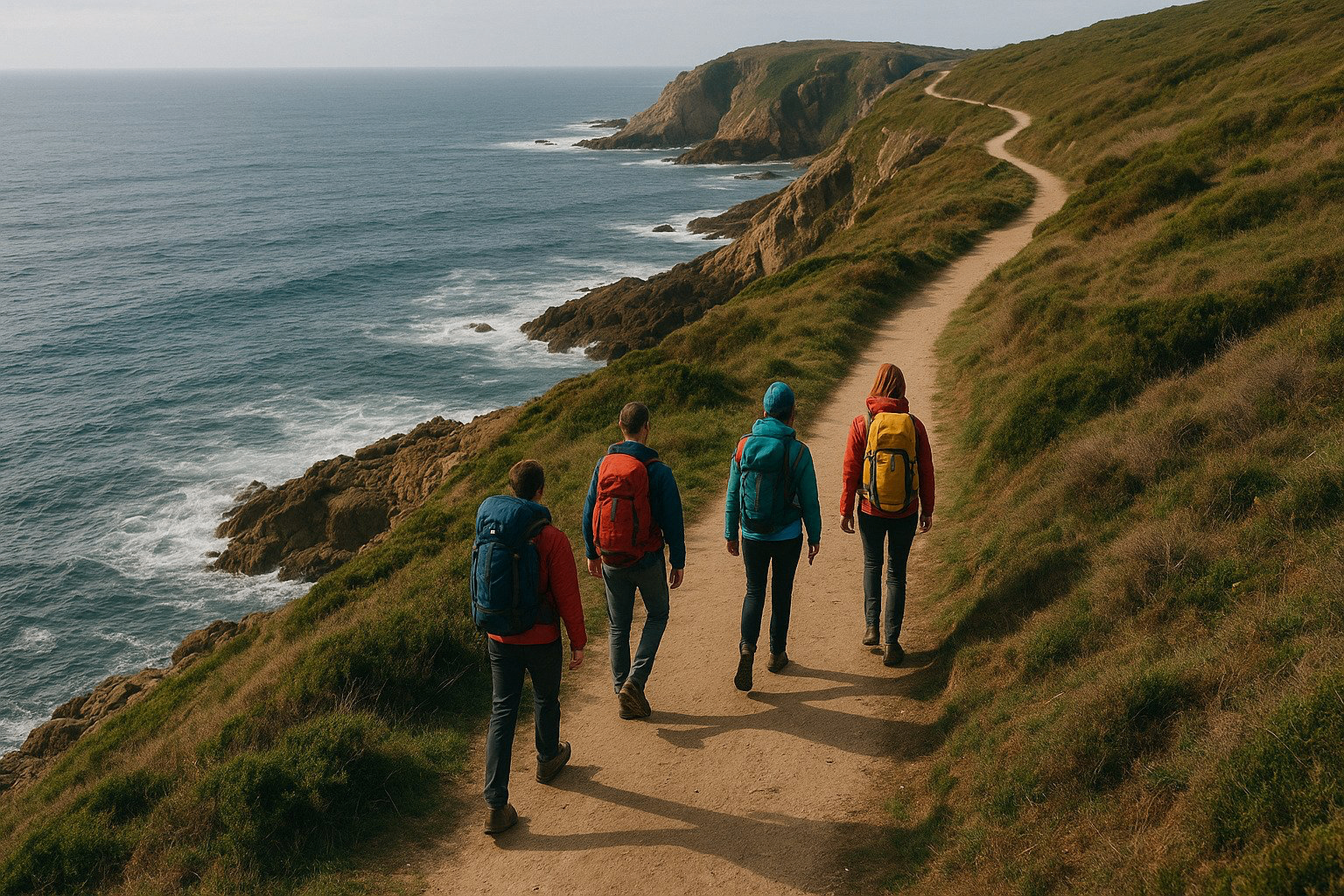
Santiago is the destination, but the journey often gives an arrival its depth. On a Portuguese Camino, that can begin with Porto’s riverside setting and continue through the coastal landscapes around Viana do Castelo. Farther north, the journey moves into Galicia, where towns, country paths and changing surroundings give each day a different character. There is no requirement to experience every kilometre in the same way.
Portugal Magik’s 10-day private Portuguese Coastal Route journey brings together Porto, Viana do Castelo, Tui, O Porriño, Baiona, Vigo, Padrón and Santiago, using private car assistance between selected walking sections. It is best understood as a supported itinerary combining walking, transfers and visits, not a promise that every stop lies on one uninterrupted coastal footpath. That flexibility leaves room for both the pilgrimage and the places along the way.
You might arrive with a clear spiritual intention, or find that your reasons become clearer as you travel. A conversation during a walk, a pause in a church or an unhurried view across the water may stay with you as strongly as the final arrival. The Holy Door need not carry the whole emotional weight of the trip. It can simply gather together what the preceding days have already offered.
5. Practical planning for the opening and Holy Year
If the ceremony itself is your priority, give your travel plans some breathing room. Arriving in Santiago before the day of the opening is more sensible than relying on a tightly timed connection on 31 December. Midday is the confirmed opening time, not a guarantee of individual entry at that moment. Check official Cathedral information for access arrangements and any instructions for visitors.
Late December in Galicia calls for practical clothing and a flexible outlook. Rain and cool conditions are possible, and waiting outdoors can feel different from keeping warm while walking. Comfortable footwear, layers and weather protection are useful choices. Avoid building a day that depends on everything happening immediately; leave space for a meal, a rest and changes to your original plan.
For visits later in 2027, the calendar matters too. July, August and the days around 25 July are the busiest periods; spring and autumn are generally calmer, though quiet conditions cannot be promised. The European Youth Pilgrimage takes place in Santiago from 15–18 July 2027. Hotels fill early during Holy Years, so advance planning is wise whether you want the opening ceremony or a later Camino.
- Plan for the midday opening on 31 December 2026, not the usual late-afternoon timing.
- Check Cathedral announcements before travel and again nearer your visit.
- Bring layers, rain protection and comfortable shoes for walking and standing.
- Keep your schedule flexible; do not assume immediate access through the door.
- Ask the Cathedral or Pilgrim’s Office about religious requirements.
- Book accommodation ahead, especially around major July dates.
6. A car-assisted Camino, shaped around your abilities
A meaningful Camino does not have to mean pushing beyond your comfortable walking distance. Portugal Magik’s private car support drops you off and picks you up so you can walk selected sections and ride the rest. Luggage is always taken care of every day. This makes it easier to focus on the experience rather than carrying bags or feeling obliged to complete a stage that does not suit you.
Choose Light walking of approximately 2–3 km a day, a gentle option suited to older travellers or people with walking limitations, with sightseeing by car and full assistance. Medium offers approximately 5–7 km for average walkers wanting nothing strenuous. Intense covers approximately 12–15 km, typically whole mornings or longer, for regular walkers and hikers. Paces can change daily, and each person can walk a different distance.
The 10-day journey includes daily breakfast and hand-picked hotels, with 5-star boutique properties in the top tier. Comfort starts from €4,950, Premium from €5,650 and Private Deluxe from €7,250 per person, based on two guests; group discounts are available for three or more. Request a quote from Portugal Magik, a licensed Lisbon tour operator, and tell us whether your priority is the December opening or a Holy Year journey later in 2027.
7. The Holy Door and the Compostela are different things
One distinction is important before you choose your walking plan. Visiting the Holy Door is not the same as qualifying for the Compostela, the pilgrimage certificate. The Compostela requires the last 100 km on foot, or 200 km by bicycle, with two stamps a day on the final stretch. Riding part of that required distance does not count as walking it.
A car-assisted journey with shorter selected walks should therefore not be assumed to qualify. If receiving the Compostela matters to you, raise that before booking so the proposed itinerary can be considered against the requirements. The Light, Medium and Intense options describe approximate daily walking preferences; none is, by itself, a guarantee of certificate eligibility.
That distinction does not diminish the personal value of an assisted pilgrimage. You can travel thoughtfully, visit Santiago and encounter the Holy Door without seeking a certificate. Whether you witness its opening at midday on 31 December 2026 or approach it during 2027, allow yourself a little time at the end. After the planning and the movement, a quiet pause may be the most fitting way to arrive.
Pick your walking pace
You don't need to be a hiker. Choose how much you'd like to walk each day.
Light
2–3 km a day
Short, gentle walks on the easiest stretches. The rest of the day is by private car, with sightseeing and full assistance.
Best for: Older travellers and anyone with walking limitations
Request this paceMedium
5–7 km a day
A relaxed walk of an hour or two on beautiful sections, then your driver takes you on. Nothing strenuous.
Best for: Average walkers with no walking issues
Request this paceIntense
12–15 km a day
Typically whole mornings or longer on the trail, with luggage handled and the car waiting at the end of the stage.
Best for: Regular walkers and hikers — advanced level
Request this paceDistances are approximate. Your car is private, so you can change pace day by day — and each person in your group can walk a different distance.
Walk the Camino with Portugal Magik
10 days on the Portuguese Coastal Route with private car assistance, luggage transfer and handpicked hotels.