1. A path with history, and room for your own reasons
The Camino de Santiago is a network of pilgrimage routes leading to Santiago de Compostela, where the cathedral traditionally honours the tomb of St James. Its Christian history matters: churches, devotional symbols and the practices of fellow pilgrims are part of the experience. Yet people arrive with many different reasons for walking, from faith and gratitude to companionship, curiosity or a simple wish to step outside their usual routine.
You can respect that history without borrowing beliefs that are not yours. A church might be a place of prayer for one walker and a place to sit quietly for another. Someone beside you may be remembering a loved one; someone else may be enjoying the architecture. There is no need to turn those differences into a debate. Walking together can leave room for them.
Our 10-day private Camino journey follows a Portuguese Coastal Route itinerary with car-assisted connections, taking in Porto, Viana do Castelo, Tui, O Porriño, Baiona, Vigo, Padrón and Santiago. Coast, towns and inland stretches bring different moods to the journey. It is not one uninterrupted ribbon of secluded countryside, and that variety is worth embracing. Reflection can happen beside the sea, but also while watching a town wake up.
2. What changes when you stop hurrying
At home, thinking often has to squeeze between obligations. A message arrives, another task appears, and a half-formed thought slips away. Walking offers a different arrangement: for a while, the next thing to do is simply take another step. That modest rhythm can make it easier to stay with a question without demanding an immediate answer. It is an opportunity, not a guaranteed mental reset.
Slowing down also changes what receives your attention. Instead of watching only the distance ahead, you may notice the feel of the ground, a shift in the breeze or a conversation drifting from a doorway. These small observations can interrupt the habit of rehearsing the same worry. Sometimes you return to it with a different perspective; sometimes you simply enjoy a welcome interval of not thinking about it.
None of this requires walking as slowly as possible. A comfortable, natural pace is more useful than turning slowness into another performance. If you are preoccupied with sore feet, exhaustion or keeping up with someone else, there may be little attention left for anything beyond the next stop. The right distance is the one that leaves you able to notice where you are.
3. Silence does not have to mean being alone
There is a companionable kind of silence that is particularly suited to walking. You share the same direction, perhaps point out something interesting, and then let the conversation rest. For couples, friends or relatives who are used to filling every pause, this can feel unfamiliar at first. A simple agreement helps: nobody needs to entertain anyone, and a quiet stretch does not mean something is wrong.
If you would like to try it, choose a short section rather than declaring the whole day silent. Put your phone away where practical, keep your attention on the path and allow thoughts to come and go. There is no special technique to master. Afterwards, you might share what you noticed—or keep it to yourself. Private thoughts do not become less valuable because they remain private.
The Camino itself will not always cooperate with your idea of stillness. There may be traffic, lively groups, building work or an energetic conversation nearby. Coastal stretches can be windy rather than hushed. Try thinking of silence as freedom from the obligation to speak, rather than the absence of sound. That makes it possible to find a reflective moment without expecting the world around you to stop.
4. Let the landscape shape the day, not dictate its meaning
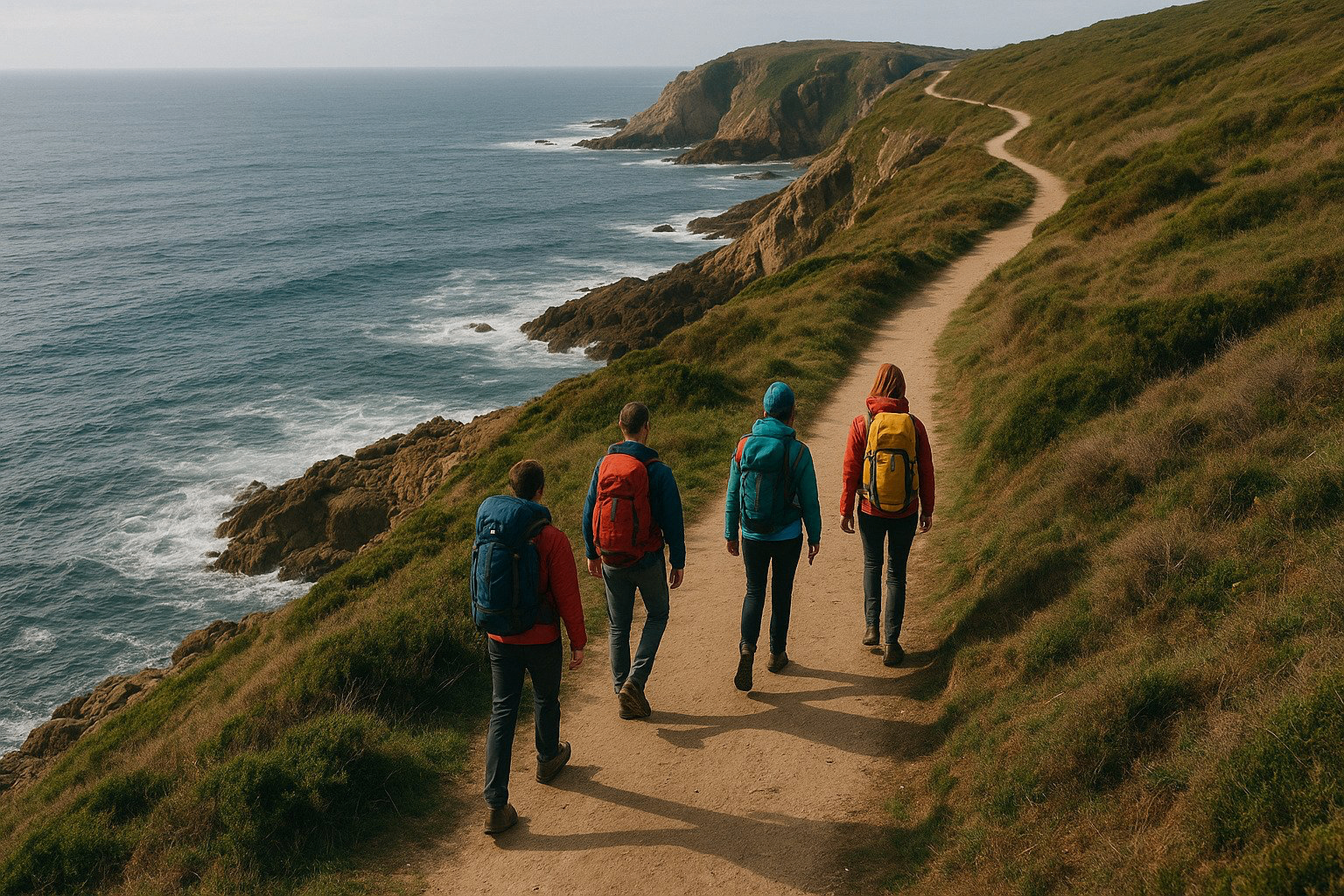
The Atlantic setting around Porto and Viana do Castelo gives parts of this journey an outward-looking feeling. There is something absorbing about watching moving water or following the line of the coast. You may find yourself thinking more freely; you may spend ten minutes thinking about nothing more profound than the waves. Both are worthwhile ways of being present, and neither needs a grand explanation.
Across the journey, the changing settings of Tui, O Porriño, Baiona, Vigo and Padrón offer a useful contrast to any romantic picture of the Camino. There are working towns, everyday journeys and streets where residents are simply getting on with life. These places remind us that pilgrimage happens within the ordinary world, not outside it. A thoughtful day can include road crossings, practical decisions and a cheerful conversation.
Arriving in Santiago can be moving, but it need not produce a dramatic revelation. Some travellers feel elated; others feel tired, thoughtful or unexpectedly ordinary. Allow time to experience the city without deciding in advance how the arrival should feel. A journey can matter because of a dozen small moments along the way, even if its final steps do not bring an answer.
5. A few practical ways to make room for reflection
A reflective Camino benefits from preparation, but not from an overfilled programme of self-improvement. You do not need to journal every evening, practise meditation or arrive with a list of personal questions. Choose one or two habits that feel inviting. The aim is to reduce unnecessary demands, not replace your everyday schedule with a new set of obligations labelled rest.
Comfort deserves attention because it makes space for everything else. Wear shoes you have already walked in, carry water and bring suitable layers and rain protection. Conditions can change, especially near the coast. Discuss any walking limitations before travelling and seek medical advice if you are unsure about suitable activity. Gentle walking should still be planned around your own needs, rather than someone else's definition of easy.
It also helps to decide what you do not need to record. Taking photographs can sharpen your attention, but repeatedly checking them can pull you away from the moment. You might keep the phone tucked away for one short stretch, then take a picture at the end. Small experiments are often easier to enjoy than strict rules, particularly when travelling with other people.
- Begin with a comfortable distance, leaving energy for the rest of the day.
- Agree on quiet stretches with companions instead of assuming everyone wants silence.
- Keep a small notebook if useful; a single sentence can be enough.
- Leave headphones off occasionally while staying alert to traffic and other walkers.
- Pause somewhere safe without expecting the pause to deliver an insight.
- Let weather, tiredness and your mood influence the day's plans.
6. How our car-assisted Camino creates breathing room
On Portugal Magik's 10-day private Camino, private car support drops you off and picks you up so you can walk the best sections and ride the rest. This removes the need to make every kilometre a walking commitment. Luggage is taken care of every day, breakfast is included daily, and hand-picked hotels give the journey a comfortable base. Other meals are not included.
Choose Light walking, approximately 2–3 km a day, for a gentle experience suited to older travellers or people with walking limitations, with sightseeing by car and full assistance. Medium offers approximately 5–7 km a day for average walkers wanting nothing strenuous. Intense covers approximately 12–15 km a day, typically whole mornings or longer, for regular walkers and hikers. The private car covers the rest; pace can change daily, and each person can walk a different distance.
That flexibility lets companions share a journey without having to share the same stamina. Comfort starts from €4,950, Premium from €5,650 and Private Deluxe from €7,250 per person, based on two guests, with group discounts for three or more. The top tier features 5-star boutique properties. Request a quote and tell us what you hope to make room for, along with your preferred walking pace and any practical needs.
7. Bring home a little space, rather than a perfect answer
It is worth separating the personal value of your journey from formal pilgrim recognition. The Compostela requires the last 100 km on foot, or 200 km by bicycle, with two stamps a day on the final stretch. Walking selected sections with car assistance does not automatically meet those requirements. If the certificate matters to you, discuss that before booking rather than assuming any Camino itinerary qualifies.
Whatever distance you walk, reflection may remain unfinished. A decision might become clearer, or you might realise that it needs more time. Walking is not a substitute for professional support when that is needed, and it cannot promise to resolve grief, stress or uncertainty. What it can offer is a different setting in which to spend time with yourself, supported by a manageable daily rhythm.
Back home, the most useful souvenir may be a small habit: taking a walk without listening to anything, allowing a conversation to pause, or leaving a question unanswered until tomorrow. You do not have to recreate the Camino to keep something from it. Sometimes a journey's lasting gift is simply discovering that you enjoy moving through the world with a little less hurry.
Pick your walking pace
You don't need to be a hiker. Choose how much you'd like to walk each day.
Light
2–3 km a day
Short, gentle walks on the easiest stretches. The rest of the day is by private car, with sightseeing and full assistance.
Best for: Older travellers and anyone with walking limitations
Request this paceMedium
5–7 km a day
A relaxed walk of an hour or two on beautiful sections, then your driver takes you on. Nothing strenuous.
Best for: Average walkers with no walking issues
Request this paceIntense
12–15 km a day
Typically whole mornings or longer on the trail, with luggage handled and the car waiting at the end of the stage.
Best for: Regular walkers and hikers — advanced level
Request this paceDistances are approximate. Your car is private, so you can change pace day by day — and each person in your group can walk a different distance.
Walk the Camino with Portugal Magik
10 days on the Portuguese Coastal Route with private car assistance, luggage transfer and handpicked hotels.