1. Read the Route Before You Read the Stones
The Portuguese Way is a family of routes, rather than one unchanging line between Portugal and Santiago. Coastal and inland paths offer different encounters with historic settlements. Porto provides a richly layered starting point; further north, rivers, estuaries and border crossings help explain why particular towns grew. A bridge was never simply a picturesque object. It connected markets, farms, religious communities and travellers who needed a dependable way across the water.
Portugal Magik’s 10-day private, car-assisted Portuguese Coastal Route journey connects Porto, Viana do Castelo, Tui, O Porriño, Baiona, Vigo, Padrón and Santiago. This is a curated itinerary, not a claim that every stop lies consecutively along one uninterrupted coastal walking trail. Tui and O Porriño belong to the inland Portuguese Way, while Baiona and Vigo bring the Atlantic landscape into the journey. That distinction matters when choosing historical stops.
Think of the journey as a series of landscapes with different stories. Along the coast, look for harbour defences, sheltered waterfronts and streets shaped by maritime trade. Inland, pay attention to river crossings, church approaches and lanes leading towards former gateways. Before setting your heart on a particular bridge, check its location: a landmark described as being on the Portuguese Camino may sit on a different branch.
2. Roman or Medieval? Look for Layers, Not Labels
A rounded arch does not, by itself, make a bridge Roman. Medieval builders also used rounded arches, and later repairs could imitate earlier work. Some crossings occupy sites used in antiquity while the visible structure is largely medieval or newer. The most useful question is therefore not simply “How old is this bridge?” but “Which parts survive from which period?” A reliable interpretation panel can offer a better answer than appearances.
From a safe riverside viewpoint, look for changes in masonry, arches of different shapes, and joins where one building phase meets another. Pointed projections around the piers, called cutwaters, help divide the current. A raised central span may give the crossing its distinctive profile. These features tell you about construction and adaptation, but they do not establish a precise date without supporting historical or archaeological evidence.
Ponte de Lima is a useful example if you are considering an inland extension or detour. Its celebrated crossing combines Roman and medieval history, rather than belonging neatly to a single period. The town is on the inland Portuguese Way, not directly on the coastal walking route. Treat a visit as something to discuss when planning your itinerary, rather than assuming it is included in the coastal journey.
3. Porto and Viana do Castelo: Find the Older Street Pattern
Porto introduces an important lesson: a historic city rarely belongs to just one age. Around the cathedral and the older streets descending towards the Douro, notice how the ground shapes the buildings. Lanes bend, steps interrupt the route, and small spaces open unexpectedly between houses. The cathedral has Romanesque origins alongside later alterations. Looking at the surrounding street pattern can be as rewarding as studying an individual façade.
Be careful not to assign a medieval date to everything that feels atmospheric. Porto’s famous Dom Luís I Bridge is a nineteenth-century iron structure, not a Roman or medieval crossing. It is a wonderful landmark, but it tells a later chapter of the city’s story. That contrast is part of the pleasure: older religious and trading neighbourhoods sit within a city repeatedly reshaped by transport, commerce and everyday life.
In Viana do Castelo, look around the historic centre for the relationship between civic buildings, churches and streets leading towards the river. The cathedral’s fortified-looking frontage provides a striking focal point. Rather than expecting an untouched medieval town, enjoy the mixture of periods. Doorways, stone window surrounds and small squares reward an unhurried wander, while the Lima estuary helps explain the town’s long connection with the sea.
4. Tui, O Porriño and the Approach Through Galicia
Tui is especially rewarding for travellers interested in medieval townscapes. Above the Miño, its cathedral has a defensive presence, with Romanesque and Gothic elements reflecting different building phases. Approach through the old streets rather than looking only at the main façade. The climb, turns and enclosed spaces reveal how the cathedral relates to the settlement around it. Across the river lies Portugal, giving the setting an unmistakable border character.
Look for passages that narrow between substantial stone walls, steps linking different street levels, and doorways altered to suit later uses. These are reminders that historic towns remain places to live, not preserved stage sets. Some buildings have been restored or substantially changed. You do not need to identify every century correctly to appreciate the pattern: a religious centre, a river crossing and generations of movement through a constrained landscape.
O Porriño offers a useful contrast. It is a Portuguese Way stop, but it should not be presented as an intact medieval village. Its notable architecture includes later work by architect Antonio Palacios. Further along the shared approach towards Santiago, Ponte Sampaio is a rewarding bridge landmark where the walking plan allows. Its historic stone crossing over the Verdugo invites the same careful approach: appreciate the structure without casually labelling everything Roman.
5. Baiona, Vigo, Padrón and Santiago: Different Kinds of History
Baiona combines old streets with a sheltered coastal setting and the fortified Monterreal peninsula. Its defences developed over time, so the walls should not be treated as a single untouched medieval construction. Look instead at how they occupy the land and command views across the water. Within the old town, close-set buildings and short lanes offer a more intimate encounter with history than the sweeping views from the waterfront.
Vigo tells another layered coastal story. Its old quarter is best approached as a neighbourhood shaped by maritime life and later urban growth, rather than a medieval village frozen in time. Padrón changes the mood again, bringing you into a landscape closely associated with the traditions of St James. Distinguish those pilgrimage traditions from independently established historical events; both matter to the Camino, but they are not the same kind of evidence.
In Santiago, the cathedral brings that distinction between origin and appearance into sharp focus. Its Romanesque fabric sits behind and alongside celebrated later additions, including the Baroque western façade. The surrounding lanes and squares make a fitting final lesson in reading a historic place. Look beyond the grand arrival photograph to covered walkways, worn paving and the way streets gather around the cathedral. Centuries remain visible together, rather than in tidy sequence.
6. A Practical Checklist for Looking More Closely
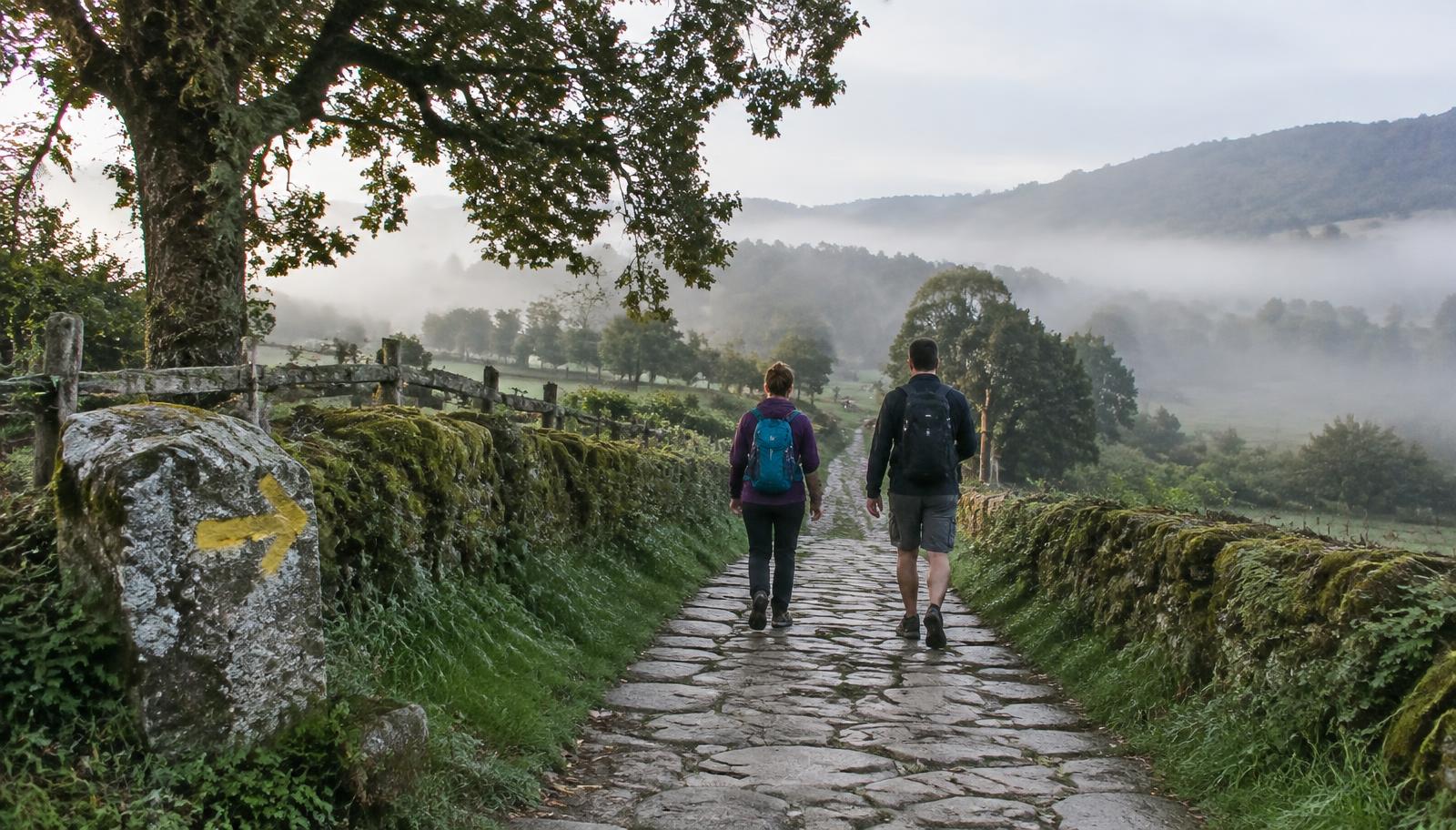
You do not need specialist equipment to enjoy these details. Comfortable shoes with dependable grip are more useful than a heavy guidebook, especially on polished stone, uneven paving or damp steps. Give yourself permission to stop. A short walk with time to examine a bridge or church doorway can reveal more than a longer stretch spent watching the clock or trying to keep up with someone else.
For bridges, the clearest view is often from an accessible riverbank rather than the roadway. Stay on public paths and avoid scrambling down unstable slopes for a photograph. Historic crossings may still carry traffic, and narrow parapets are not viewing platforms. In villages, remember that an intriguing doorway may belong to a private home. Enjoy the detail without blocking access or peering into someone’s living space.
Use the checklist below as a gentle prompt, not a test to complete at every stop. One well-observed feature is enough to make a place memorable. If a date or attribution is unclear, record the name and check it later through a local heritage source. Leaving a question open is better than attaching a confident but inaccurate Roman or medieval label.
- Read the heritage panel before deciding how old a structure is.
- Look for changes in stonework, arch shape and building joints.
- Notice how streets connect churches, rivers, markets and gateways.
- Check whether a landmark sits on your chosen route or needs a detour.
- Allow extra time for slopes, cobbles, steps and photo pauses.
- Respect worshippers, residents, traffic and any access restrictions.
7. Explore at Your Pace With Private Car Assistance
Portugal Magik’s private car support drops walkers off and picks them up, allowing you to walk selected sections and ride the rest. Choose approximately 2–3 km daily at Light pace, gentle and suited to older travellers or those with walking limitations; 5–7 km at Medium pace for average walkers wanting nothing strenuous; or 12–15 km at Intense pace, typically whole mornings or longer, for regular walkers and hikers.
Your pace can change each day, and each person can walk a different distance. That flexibility leaves room for historical interests without making every transfer a walking challenge. Luggage is taken care of every day, breakfast is included daily, and accommodation uses hand-picked hotels, with 5-star boutique properties in the top tier. Historic centres can still involve cobbles and steps, so discuss any mobility needs before choosing the walks.
Comfort starts from €4,950, Premium from €5,650 and Private Deluxe from €7,250 per person, based on two guests, with group discounts for three or more. Request a quote and tell us which bridges, villages or architectural details interest you most. If earning the Compostela matters, raise that too: it requires the last 100 km on foot, with two stamps daily on the final stretch; selective car-assisted walking does not automatically qualify.
Pick your walking pace
You don't need to be a hiker. Choose how much you'd like to walk each day.
Light
2–3 km a day
Short, gentle walks on the easiest stretches. The rest of the day is by private car, with sightseeing and full assistance.
Best for: Older travellers and anyone with walking limitations
Request this paceMedium
5–7 km a day
A relaxed walk of an hour or two on beautiful sections, then your driver takes you on. Nothing strenuous.
Best for: Average walkers with no walking issues
Request this paceIntense
12–15 km a day
Typically whole mornings or longer on the trail, with luggage handled and the car waiting at the end of the stage.
Best for: Regular walkers and hikers — advanced level
Request this paceDistances are approximate. Your car is private, so you can change pace day by day — and each person in your group can walk a different distance.
Walk the Camino with Portugal Magik
10 days on the Portuguese Coastal Route with private car assistance, luggage transfer and handpicked hotels.